O que faz alguém querer trabalhar em uma empresa do setor da moda?
Toda temporada de resultados fala a mesma língua: receita, margem, ação. Mas há uma informação que a Business of Fashion decidiu perguntar diretamente a quem faz esse setor:
"o que determina a capacidade de uma marca atrair talentos?”
A pesquisa “The Most Desirable Fashion Companies to Work for in 2026”, ouviu 1.173 profissionais e aspirantes de 93 países. Chanel lidera o ranking, seguida por Hermès e Dior. Logo abaixo, Louis Vuitton.
Na busca por Estabilidade
Um dos achados mais reveladores da pesquisa é também o mais simples de explicar:
os profissionais entrevistados disseram enxergar nas grandes maisons um porto seguro. Legado consolidado, fluxo de caixa estável, presença de mercado que resiste a ciclos econômicos difíceis… tudo isso pesa mais do que se imaginava na hora de escolher onde construir carreira!
Em um momento em que o setor de moda, como um todo, vive reestruturações, cortes e trocas de comando frequentes, faz sentido que a segurança institucional tenha subido de prioridade. Trabalhar em uma casa com 100 anos de história é, para muita gente, uma forma de proteção contra a volatilidade que se tornou rotina.
E aqui está o ponto que interessa a quem lidera empresas de luxo no Brasil: essa estabilidade não é um dado que se compra da noite para o dia. Ela se constrói e se comunica com consistência ao longo de anos. Marcas brasileiras de alto padrão que conseguem transmitir solidez, trajetória e visão de longo prazo largam na frente na disputa por talento.
Prestígio pesa mais que salário, até um certo ponto.
Outro dado que merece atenção: os talentos estão dispostos a priorizar prestígio de marca em vez de um salário mais alto.
Isso não significa que remuneração deixou de importar! Isso significa que, no topo da pirâmide do luxo, a decisão de carreira é tratada como investimento de reputação, não apenas como transação financeira.
Faz sentido dentro da lógica do setor: um nome forte no currículo abre portas que dinheiro sozinho não abre. Mas esse comportamento também expõe uma tensão que a própria pesquisa não deixa escondida. Porque, se o prestígio compra parte da lealdade do talento, ele não compra toda ela e é exatamente aí que mora o dado mais desconfortável do relatório.
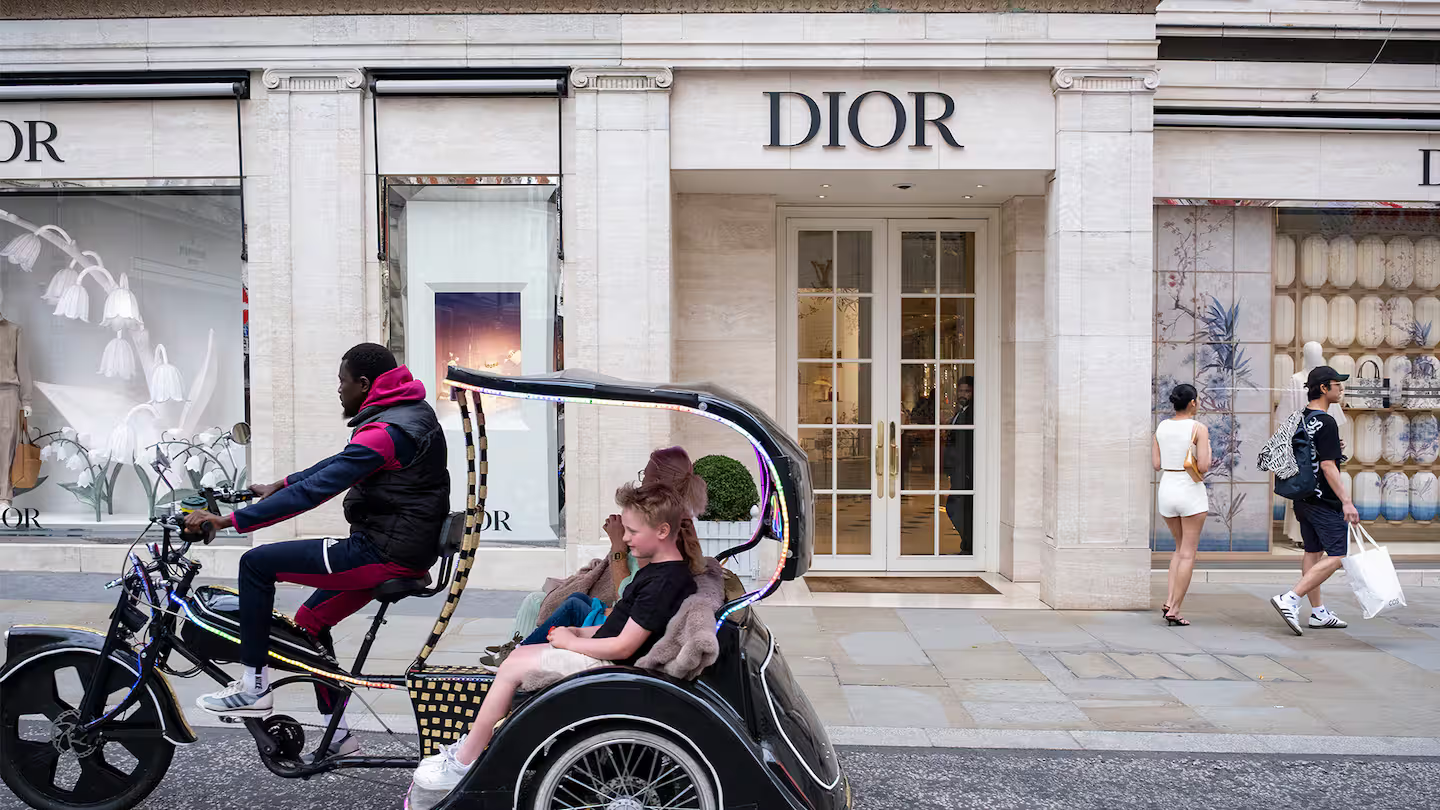
Dior
A crise de confiança que ninguém está falando
A pesquisa revela uma distância crescente entre o que as empresas prometem publicamente e o que os funcionários vivem no dia a dia. Apenas 27% dos profissionais atualmente empregados no setor disseram que a reputação externa de seu empregador está fortemente alinhada com sua experiência real de trabalho.
O número que realmente deveria preocupar quem lidera equipes é o seguinte:
entre os que percebem essa distância, 80% pretendem sair da empresa ou estão abertos a novas oportunidades dentro de um ano.
Ou seja: o prestígio atrai. Mas sozinho, não retém. Uma marca pode ser extremamente desejada de fora para dentro e, ainda assim, perder talentos, se a experiência real de trabalho não sustentar a narrativa que a empresa constrói para o mundo.
Lição para o Brasil
Para o mercado de luxo brasileiro, ainda em fase de amadurecimento em termos de employer branding, esse é um alerta valioso. Não adianta investir pesado em construir uma imagem de empregador desejável se a cultura interna, a gestão direta e o dia a dia da operação não entregam o que a marca promete lá fora. O gap entre discurso e realidade é, hoje, um dos maiores riscos de retenção do setor.
Transparência salarial ainda é exceção, não regra
Outro ponto que a pesquisa deixa claro: falar abertamente sobre remuneração continua sendo raro. Apenas 17% dos profissionais de moda afirmaram que suas empresas publicam faixas salariais, no setor de beleza, que também foi pesquisado separadamente, esse número sobe para 26%, mas segue baixo.
Esse silêncio salarial, historicamente naturalizado no luxo, onde discrição sempre foi tratada como sinônimo de sofisticação, está cada vez mais desalinhado com o que gerações mais jovens de profissionais esperam de um empregador. A opacidade que antes passava por elegância corporativa hoje é lida, por parte crescente da força de trabalho, como falta de transparência.
Inteligência artificial: o time quer, a empresa ainda não acompanha
Um dos achados mais interessantes da pesquisa é comportamental, não estrutural. Profissionais de moda e beleza se mostraram otimistas em relação à inteligência artificial. Estão mais dispostos a adotar, aprender e integrar essas ferramentas ao trabalho do que os próprios empregadores estão preparados para oferecer. Existe uma lacuna real de treinamento e capacitação, e ela está do lado da empresa, não do lado do talento.
Isso inverte uma expectativa comum: normalmente se assume que é a liderança que precisa “convencer” as equipes a adotar tecnologia. Aqui, o cenário é ironicamente o oposto: é a liderança que está devendo estrutura para acompanhar o apetite que já existe dentro das equipes.
O que fica de lição para quem lidera marcas de luxo no Brasil
As marcas mais desejadas do mundo venceram por estabilidade percebida, por prestígio de marca e, cada vez mais, por propósito genuíno. As que vão perder talento nos próximos anos são as que prometerem qualquer uma dessas três coisas sem realmente entregar. Para o luxo brasileiro, setor que já cresce a taxas muito acima da média global e que começa a atrair talento internacional, a régua acabou de subir.
What Makes Someone Want to Work for a Fashion Company?
Every earnings season speaks the same language: revenue, margins and share price. But there is another question that *The Business of Fashion* decided to ask the people who actually shape this industry:
What determines a brand’s ability to attract talent?
The survey, *The Most Desirable Fashion Companies to Work for in 2026*, heard from 1,173 professionals and aspiring industry entrants across 93 countries. Chanel topped the ranking, followed by Hermès and Dior. Louis Vuitton appeared close behind.
The Search for Stability
One of the most revealing findings in the survey is also one of the simplest to understand: respondents see the major maisons as safe havens.
An established legacy, stable cash flow and a market presence capable of withstanding difficult economic cycles all carry more weight than many might have expected when professionals decide where to build their careers.
At a time when the fashion industry as a whole is facing restructurings, job cuts and frequent leadership changes, it is understandable that institutional security has become a greater priority. For many professionals, working for a house with a 100-year history offers a degree of protection against the volatility that has become commonplace.
This is where the findings become particularly relevant for those leading luxury companies in Brazil: stability is not something that can be acquired overnight. It is built and communicated consistently over many years.
Brazilian high-end brands that succeed in conveying solidity, a credible track record and a long-term vision begin the competition for talent from a stronger position.
Prestige Matters More Than Salary, Up to a Point
Another finding deserves attention: talent is willing to prioritize brand prestige over a higher salary.
This does not mean that compensation has ceased to matter. It means that, at the highest levels of the luxury industry, career decisions are treated as investments in reputation, rather than merely as financial transactions.
This makes sense within the logic of the sector. A powerful name on a résumé can open doors that money alone cannot. Yet this behavior also exposes a tension that the survey does not attempt to hide.
Prestige may earn part of an employee’s loyalty, but it cannot secure all of it. This is precisely where the report’s most uncomfortable finding emerges.
The Crisis of Trust No One Is Talking About
The survey reveals a growing distance between what companies promise publicly and what employees experience in their daily working lives.
Only 27% of professionals currently employed in the industry said that their employer’s external reputation was strongly aligned with their actual experience at work.
The figure that should truly concern anyone leading a team is this:
Among those who perceive this gap, 80% intend to leave their company or are open to new opportunities within the next year.
In other words, prestige attracts. But prestige alone does not retain.
A brand can be highly desirable from the outside and still lose talent if the actual employee experience fails to support the narrative the company presents to the world.
A Lesson for Brazil
For Brazil’s luxury market, which is still maturing in terms of employer branding, this is an important warning.
There is little value in investing heavily in the image of a desirable employer when the internal culture, direct management and everyday operation fail to deliver what the brand promises externally.
The gap between discourse and reality is now one of the sector’s greatest retention risks.
Salary Transparency Remains the Exception, Not the Rule
The survey also makes another point clear: open conversations about compensation remain rare.
Only **17% of fashion professionals** said that their companies publish salary ranges. In the beauty industry, which was surveyed separately, the figure rises to 26%, but remains low.
This silence around compensation has historically been normalized in luxury, an industry in which discretion has often been treated as synonymous with sophistication.
It is, however, increasingly out of step with what younger generations of professionals expect from an employer. The opacity that was once perceived as corporate elegance is now seen by a growing proportion of the workforce as a lack of transparency.
Artificial Intelligence: Employees Are Ready, but Companies Are Falling Behind
One of the survey’s most interesting findings is behavioral rather than structural.
Fashion and beauty professionals expressed optimism about artificial intelligence. They are more willing to adopt, learn and integrate these tools into their work than their employers are prepared to support.
There is a genuine gap in training and capability-building, and it lies with the companies, not with the talent.
This reverses a common assumption. Leadership is usually expected to convince teams to embrace new technology. In this case, the situation is almost the opposite: employees already have the appetite, while leadership has yet to provide the structure required to support it.
The Main Lesson for Leaders of Luxury Brands in Brazil
The world’s most desirable brands have succeeded because of their perceived stability, the prestige attached to their names and, increasingly, the strength of a genuine purpose.
The companies most likely to lose talent over the coming years will be those that promise any of these qualities without actually delivering them.
For Brazil’s luxury market, a sector already growing at rates well above the global average and beginning to attract international talent, the standard has just been raised.