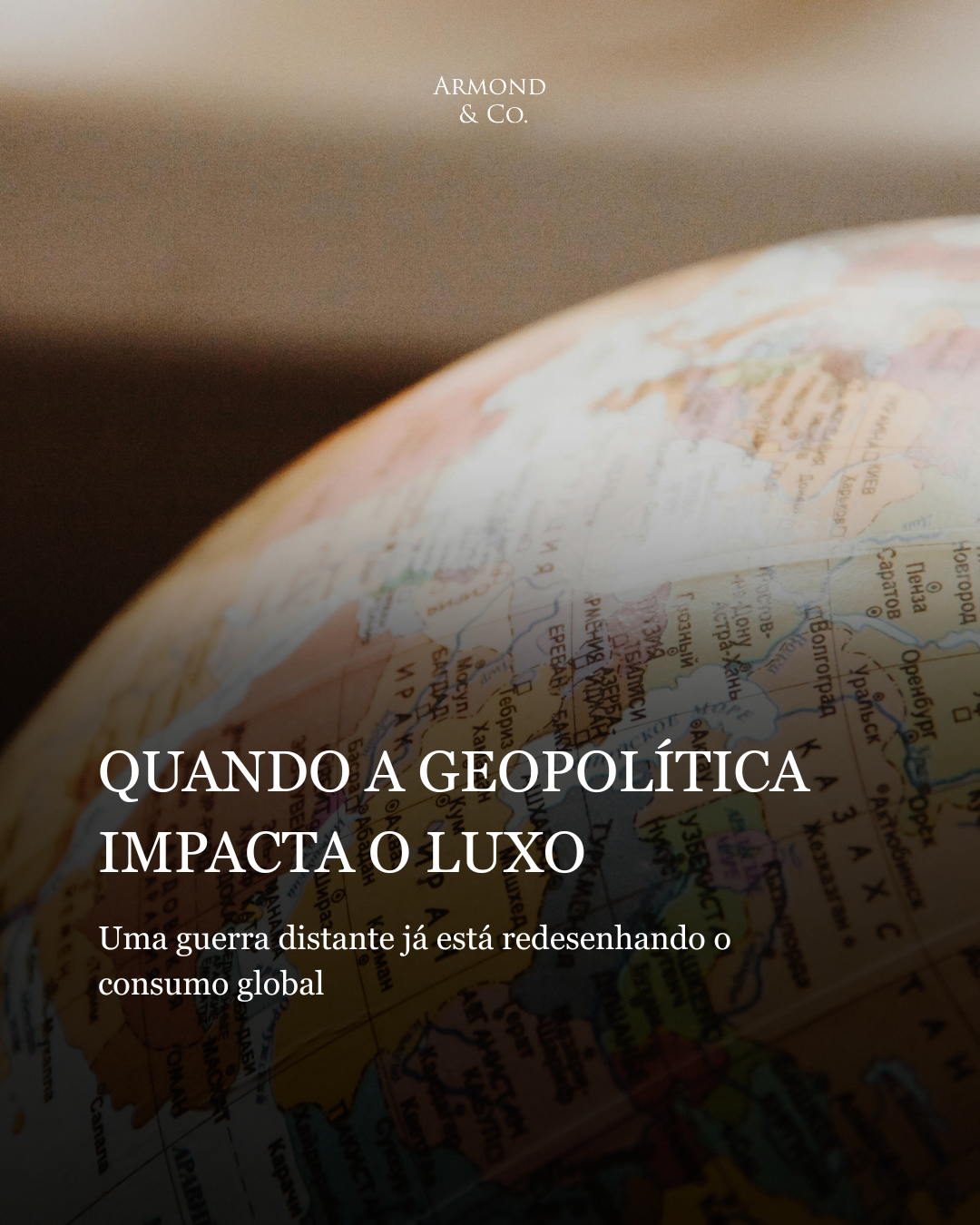
Uma guerra a milhares de quilômetros de distância está, silenciosamente, redesenhando o comportamento de consumo do topo da pirâmide global.
E isso traz insights importantes para quem opera no mercado de luxo.
A tensão no Oriente Médio já provocou uma perda estimada de US$176 bilhões em valor de mercado nas principais empresas europeias de luxo incluindo LVMH, Kering e Hermès.
Isto trata-se de um sinal claro de mudança estrutural.
O que está acontecendo na prática:
• Queda relevante no fluxo de turistas de alta renda, especialmente do Golfo para a Europa
• Redução de tráfego em lojas físicas e hubs de consumo de luxo
• Impacto direto nas vendas: queda de até 11% no Oriente Médio para alguns grupos
• Em casos mais extremos, retração de até 50% em vendas e circulação em mercados-chave como Dubai
Ainda que o Oriente Médio represente entre 5% e 10% do consumo global de luxo, sua relevância vai além do volume:
é um dos principais motores de turismo e consumo internacional de alto ticket.
O ponto central deste cenário é o comportamento.
Historicamente, o luxo foi considerado resiliente a choques macroeconômicos.
Hoje, vemos um novo padrão emergindo:
→ O consumidor de alta renda não deixa de consumir, mas passa a consumir com maior cautela, seletividade e racionalidade
Isso significa que o luxo entra, cada vez mais, em uma lógica de sensibilidade ao contexto global, sem aquela curva de demanda inelástica.
Leitura estratégica para marcas:
- O modelo baseado em mobilidade global (turismo + retail internacional) está mais exposto do que se imaginava
- A dependência de mercados específicos, mesmo premium, representa risco estrutural
- A percepção de valor se torna ainda mais crítica em momentos de instabilidade
Porque, no fim, o luxo está no contexto da realidade, refletindo e reagindo ao mundo.
E talvez este seja o verdadeiro ponto de inflexão:
Vender desejo, desde que tenha valor real e em um contexto seguro.
#LuxuryBusiness #MercadoDeLuxo #Strategy #Geopolitics #ArmondInsights
A war thousands of kilometers away is quietly reshaping consumption behavior at the very top of the global pyramid.
And this brings important insights for those operating in the luxury market.
Tensions in the Middle East have already triggered an estimated $176 billion loss in market value across major European luxury companies, including LVMH, Kering, and Hermès.
This is a clear signal of structural change.
What is happening in practice:
- A significant decline in high-net-worth tourist flows, particularly from the Gulf to Europe
- Reduced traffic in physical stores and luxury consumption hubs
- Direct impact on sales, with declines of up to 11% in the Middle East for some groups
- In more extreme cases, contractions of up to 50% in sales and footfall in key markets such as Dubai
Although the Middle East represents between 5% and 10% of global luxury consumption, its relevance goes beyond volume:
it is one of the main drivers of high-ticket international tourism and spending.
The core of this scenario lies in behavior.
Historically, luxury has been considered resilient to macroeconomic shocks.
Today, we are seeing a new pattern emerge:
→ High-income consumers are not stopping consumption, but they are becoming more cautious, selective, and rational in how they spend
This means luxury is increasingly entering a logic of sensitivity to the global context, moving away from the idea of fully inelastic demand.
Strategic implications for brands:
- A model heavily reliant on global mobility (tourism + international retail) is more exposed than previously assumed
- Dependence on specific markets, even premium ones, represents structural risk
- Perceived value becomes even more critical in times of instability
Because, ultimately, luxury exists within the context of reality, reflecting and responding to the world.
And perhaps this is the true inflection point:
Selling desire—provided it is grounded in real value and within a context of security.